Flexo vs. Digital Printing for Flexible Packaging
Flexo printing suits high-volume runs and complex multi-color designs on large sheets. Digital printing is better for short runs, rapid prototyping, and frequent changes. The choice depends on order volume, design complexity, and turnaround time.
- Flexo printing is the standard for high-volume production runs due to lower per-unit cost and high speed.
- Digital printing removes the need for plates, making it ideal for short runs and frequent design changes.
- Substrate type and ink compatibility strongly influence which method will produce the best quality.
- Engineers must evaluate total cost, not just print quality, when selecting a print technology.
- Hybrid approaches can combine the strengths of both methods for specific packaging applications.
Can flexo printing and digital printing replace each other?
No. Each method solves a different problem in the flexible packaging supply chain. Flexo printing, or flexographic printing, uses flexible rubber rollers to transfer ink onto the web. It handles long runs efficiently and supports a broad range of substrates. Digital printing uses toner or liquid ink to deposit images directly onto the material without physical plates. It is slower but far more flexible for small batches.
The decision is rarely about which technology is better. It is about which technology fits the commercial and technical requirements of the project. A rigid choice can lead to wasted materials, delayed shipments, or poor print quality.
How do flexo and digital printing differ in operation?
Flexo printing requires a press setup for each color. The operator loads the substrate web, aligns the ink fountains, and calibrates the rollers. Once the press is running, it moves at high speed, often several hundred meters per minute. The ink is transferred from the roller to the substrate through a thin layer of water, which helps control the image.
Digital printing skips the plate-making step entirely. The design file goes directly to the print head. The press can switch designs in minutes or even seconds. This makes it suitable for short runs, sampling, and variable data applications. The speed is much lower than flexo. Most digital presses run at a fraction of the linear speed of a flexo line.
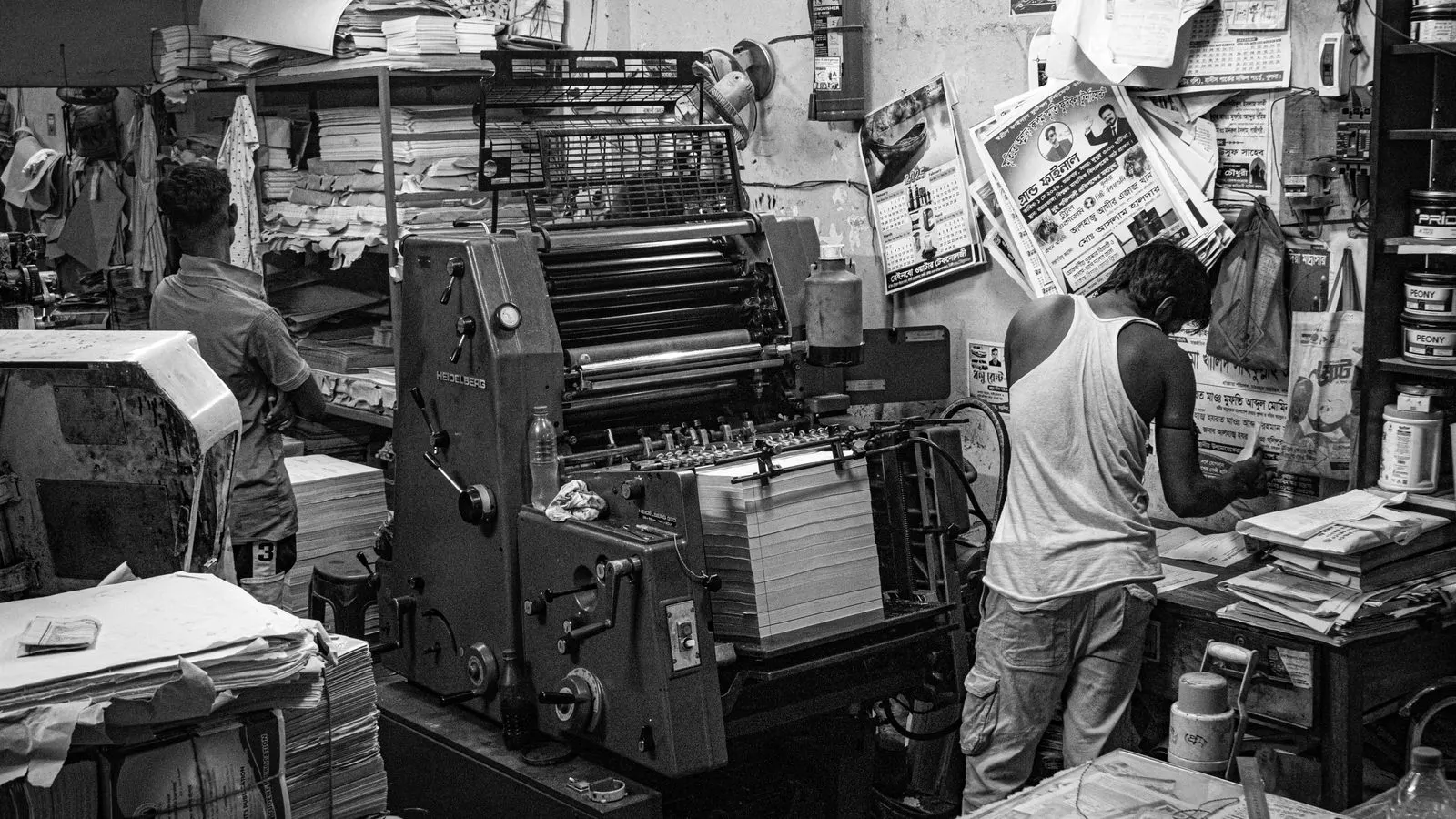
The physical setup also differs. Flexo presses are large machines that require significant floor space and skilled operators. Digital presses are smaller and can be installed in more compact environments. They are also easier to operate with less specialized training, though they still require maintenance and calibration.
What is the cost comparison for different run lengths?
Cost is the most common factor in the decision. Flexo printing has high upfront costs. Plate making, press setup, and material handling add to the total. However, the cost per unit drops as the run length increases. A million-meter run of a simple bag will have a very low per-unit cost if printed with flexo.
Digital printing has low setup costs. There are no plates and minimal setup time. The cost per unit is higher. For a run of one hundred meters, digital printing is often more economical than flexo. As the run length grows, the cost gap widens. There is a break-even point where the higher per-unit cost of digital printing becomes more expensive than the lower per-unit cost of flexo, even after accounting for the setup savings.
The exact break-even point depends on the number of colors, the substrate, and the complexity of the artwork. A single-color label might break even at a lower run length than a four-color pouch design. Engineers should model the total cost for the specific project rather than relying on a fixed number.
Which method produces better print quality?
Flexo printing can produce sharp, high-quality images, especially for large-format designs and bold graphics. The rubber rollers allow for a slightly softer edge, which is often acceptable for packaging. The main limitation is dot gain. Fine details and small text can blur if the press is not calibrated precisely.
Digital printing generally offers higher resolution and sharper edges. It is better for fine lines, small text, and complex gradients. The ink is deposited in tiny droplets or dots, which allows for precise control. However, the ink layer is very thin. It may not cover the substrate as well as flexo ink, which can lead to color shift or poor opacity on some materials.
Substrate type matters. Glossy or coated substrates tend to work well with both methods. Matte or uncoated substrates may absorb the ink differently. Digital inks can sometimes bleed on these materials. Flexo inks are often more forgiving, but they can also be harder to control on very absorbent surfaces. The final quality depends on the combination of press, ink, and substrate.
When should you choose flexo printing?
Flexo printing is the default choice for high-volume production. If the design is fixed and the run length is long, flexo will almost always be the more cost-effective option. It is also the standard for complex packaging structures that require precise registration and high-speed printing.
Choose flexo when:
- The run length is high, typically several thousand meters or more.
- The design is complex and requires multiple colors or large solid areas.
- The substrate is a standard flexible packaging material like polyethylene, polypropylene, or BOPP.
- The project requires high speed and continuous production.
- The budget is focused on minimizing the cost per unit.
Flexo is also well-suited for multi-layer structures. The press can be configured to print on the inside and outside of a laminate in a single pass. This is a significant advantage for pouches and bags that need printing on both sides.
When should you choose digital printing?
Digital printing is the better choice when flexibility and speed are more important than per-unit cost. It is ideal for short runs, sampling, and projects where the design may change after the print job is started.
Choose digital when:
- The run length is short, typically under a few hundred meters.
- The design is subject to frequent changes or updates.
- The project requires rapid prototyping or sampling.
- The design includes fine details, small text, or high-resolution images.
- The operation needs to support variable data or personalized packaging.
Digital printing is also useful for testing new designs before committing to a full flexo run. It allows brands to see the final look without the cost of plates or a long setup. This reduces the risk of errors and shortens the time to market.
How do hybrid approaches work?
Some manufacturers combine flexo and digital printing in a single workflow. A digital press is used to print a small sample run. The customer approves the sample. Then, a flexo press is used to print the full production run. This approach reduces the risk of errors and allows for faster iteration.
Another hybrid approach is to use digital printing for short-term promotional runs and flexo printing for the core product line. This allows manufacturers to support both long-term sales and short-term marketing campaigns without switching the entire production line.
The key is to integrate the two methods in the production plan. The design team, print team, and production team must work together. The files must be compatible with both presses. The inks must be compatible with the substrates. The quality checks must be aligned. Without this integration, the hybrid approach can create more problems than it solves.
What are the common mistakes when choosing a print method?
The most common mistake is choosing a method based on price alone. A low per-unit cost does not always mean a low total cost if the setup time is long or the quality is poor. Another mistake is ignoring the substrate. A design that looks good on a coated substrate may not print well on an uncoated one.
Engineers also often underestimate the time required for setup. Flexo setup can take hours. Digital setup can take minutes. If the project has a tight deadline, a slightly more expensive digital run may be the better choice.
Finally, many teams do not test the inks. Different inks behave differently on different substrates. A small test run is always recommended before a full production run. This prevents waste and ensures that the final product meets the quality standards.
What are the future trends in flexible packaging printing?
The future of flexible packaging printing is likely to involve more integration between flexo and digital methods. Digital presses are getting faster and cheaper. Flexo presses are getting smarter and more precise. The line between the two is blurring.
Sustainability is also a major factor. Water-based inks and UV inks are becoming more common. These inks are less harmful to the environment and are often required for food-grade packaging. Both flexo and digital presses can use these inks, but the compatibility varies.
Variable data printing is growing in importance. Brands want to create personalized packaging. Digital printing is the only method that can handle this at scale. Flexo printing is not designed for variable data. It is a fixed-image process.
The choice of print method will continue to depend on the specific needs of the project. There is no single best method. The best method is the one that delivers the right quality, at the right cost, on time.
Final thoughts
Flexo printing and digital printing are not competitors. They are complementary tools. Flexo is the workhorse for high-volume production. Digital is the nimble tool for short runs and rapid changes. The right choice depends on the run length, the design, the substrate, and the deadline.
Engineers should evaluate the total cost of ownership, not just the print quality. They should test the inks and substrates. They should consider the time required for setup and the flexibility of the press. By making an informed decision, they can avoid costly mistakes and deliver a high-quality product on time.
Frequently asked questions
Can digital printing match the speed of flexo printing?
No. Digital printing is significantly slower than flexo printing. Flexo presses can run at high speeds for long runs, while digital presses are optimized for shorter, more flexible runs.
Is flexo printing more expensive than digital printing for small runs?
Yes. Flexo printing has high setup costs due to plate making. For small runs, the total cost of flexo printing is usually higher than digital printing.
Which method is better for printing on polyethylene?
Both can print on polyethylene, but the results depend on the ink and press. Digital inks may need a primer or coating to adhere well to polyethylene. Flexo inks are often more forgiving on this substrate.
Can I use digital printing for a large production run?
Yes, but it is usually not cost-effective. Digital printing is slower and has a higher per-unit cost. For large runs, flexo printing is typically the better choice.
How long does it take to set up a flexo press?
Setup time varies depending on the number of colors and the complexity of the design. It can take several hours. Digital press setup is much faster, often taking minutes.